
Building Safer Roads: The Roundabout
April 22, 2026
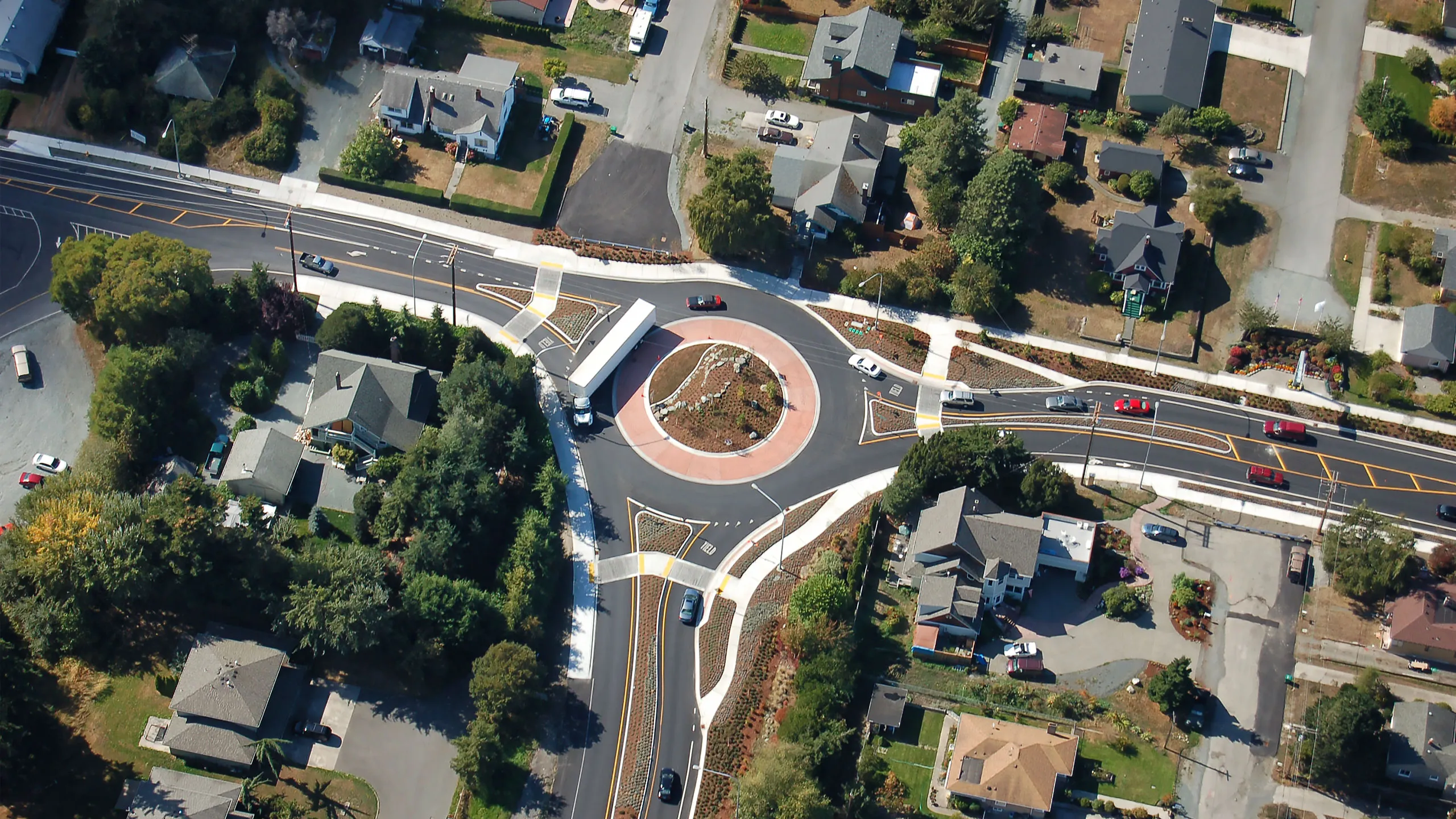
Building Safer Roads With Modern Roundabouts
Traffic jams and high-speed intersections are a major headache for growing communities. These outdated junctions lead to accidents and daily commuter frustration. Converting a traditional intersection into a roundabout is a highly effective way to slow down vehicles while keeping traffic moving continuously. This upgrade can reduce severe collisions by up to 80 percent. But how does a busy intersection transform into a smoothly flowing circular junction without shutting down the entire town? As a trusted heavy civil contractor, SRV Construction manages a highly coordinated sequence of planning, earthwork, and paving to bring these vital infrastructure upgrades to life.
The Seven Stages of Roundabout Construction
Building a roundabout requires a methodical approach. We follow a strict sequence to ensure safety, quality, and minimal disruption to the community.
1. Pre-construction planning and traffic control.
2. Site preparation and utility relocation.
3. Earthwork and foundation building.
4. Structural framing and concrete work.
5. Paving the circular driving lanes.
6. Finishes, signage, and landscaping.
7. Final inspections and project handover.
Pre-Construction Planning and Traffic Control
Before a single shovel hits the dirt, our team spends weeks planning the project. A roundabout requires precise geometry to force vehicles to slow down while accommodating large trucks and emergency vehicles.
During this phase, we secure the necessary local and state permits. We also develop a comprehensive traffic control plan. Because we often build roundabouts on existing active roads, we must figure out how to keep traffic moving safely around the work zone. Establishing clear detour routes and temporary traffic signals early prevents driver confusion and keeps both the public and our work crews safe.
Site Preparation and Utility Relocation
Once we secure the site, we begin clearing the area. Roundabouts require more physical space than standard intersections, so we often need to widen the existing footprint.
The biggest challenge in this phase is what lies beneath the surface. We must locate, protect, or relocate existing underground utilities. This process involves moving:
• Water mains
• Sanitary sewer lines
• Natural gas pipes
• Telecommunication cables
Because SRV Construction specializes in public works engineering, our crews expertly handle these complex underground realignments without disrupting local services.
Earthwork and Foundation Building
With the utilities sorted out, we move on to earthwork. We excavate the existing roadway and grade the soil to match the precise elevations required by the design. Proper drainage is critical for roundabouts. We install storm drains and catch basins to ensure rainwater flows away from the driving lanes, preventing dangerous pooling. Next, we build the structural foundation. We lay down crushed rock and compact it heavily to create a solid, stable base. This foundation must support the weight of thousands of vehicles every day for decades.
Structural Framing and Concrete Work
A roundabout gets its shape from concrete. We install forms and pour the concrete curbs, gutters, and the central truck apron. The truck apron is the slightly elevated ring around the center island. It gives large semi-trucks the extra room they need to navigate the circle without driving over the landscaped center. We use high-strength concrete mixes designed to withstand the Pacific Northwest weather. Our crews carefully finish the concrete to ensure smooth edges and proper water runoff.
Paving the Driving Lanes
Once the concrete cures, we bring in the asphalt pavers. Paving a roundabout requires specialized techniques because the surface is circular and banked. The roadway tilts slightly outward to shed water, which means our operators must lay the asphalt with precision. We typically lay down multiple layers of asphalt. We compact each layer with heavy rollers to achieve a dense, durable surface. The final layer provides a smooth, quiet ride for drivers.
Finishes, Signage, and Landscaping
A roundabout is not complete until we install the final safety features. We paint highly visible lane markings and crosswalks. We install signage well ahead of the roundabout to warn drivers to slow down and yield. Lighting is also essential. We install streetlights to illuminate the intersection at night. Finally, we landscape the center island. The landscaping physically blocks the driver's view across the intersection. This visual barrier naturally encourages them to slow down and pay attention to the cars immediately to their left.
Final Inspections and Project Handover
Before we open the roundabout to full traffic, local transportation officials and engineers conduct a rigorous final inspection. They check the grading, concrete strength, sign reflectivity, and overall safety of the design. Once everything passes inspection, we remove the temporary traffic barriers and open the new intersection to the public.
A Local Success Story in the Pacific Northwest
Based in Oak Harbor, WA, SRV Construction has a long history of tackling complex public works engineering projects. Recently, we completed the Commercial Ave. Roundabout upgrade in Washington State. This project required keeping a heavily trafficked local highway open during the entire build.
Our team faced significant obstacles, including poor soil conditions and unexpected underground utility conflicts. By leaning on our extensive site development experience, we stabilized the subgrade and rerouted the water lines ahead of schedule. The final result was a beautiful, fully functional roundabout that eliminated the long backups residents used to face during the evening commute.
Building trust through quality artistry is our top priority. Here is what one municipal partner had to say about our approach.
"SRV Construction handled our intersection overhaul with incredible professionalism. Their communication regarding traffic impacts was excellent, and the final roundabout was delivered on time and on budget. The quality of the paving and concrete work speaks for itself."
Check out our Projects to learn more about how we manage complex paving and roadway improvements. You can also read more client testimonials and view our recent projects, such as the Banta Road development.
Roundabout Construction FAQs
Q: Why do roundabouts take up more space than traditional intersections?
Roundabouts require a larger footprint to accommodate the circular driving lanes and the central island. This geometry forces vehicles to slow down and allows large trucks to navigate the turn safely.
Q: How do you manage traffic while building a roundabout?
We develop a comprehensive traffic control plan during the pre-construction phase. This involves setting up temporary detours, utilizing flaggers, and building the roundabout in designated phases to keep lanes open.
Q. What happens to existing underground utilities during construction?
We carefully locate all underground utilities before digging. We then protect them in place or relocate them to safely accommodate the new roundabout footprint without disrupting local services.
Q: Are roundabouts actually safer for the community?
Yes. Roundabouts eliminate left turns across oncoming traffic and force all vehicles to travel in the same direction at lower speeds. This design drastically reduces the likelihood of severe collisions.
Summary
Roundabout construction is a complex process that blends heavy earthwork, precise underground utility management, and specialized paving techniques. By following a strict sequence of planning, preparation, and execution, general contractors can transform dangerous intersections into safe, smoothly flowing roadways. The result is a durable piece of infrastructure that serves the community for generations.